


Does Rotational Core Strength help Power Hitting Bat Speed?


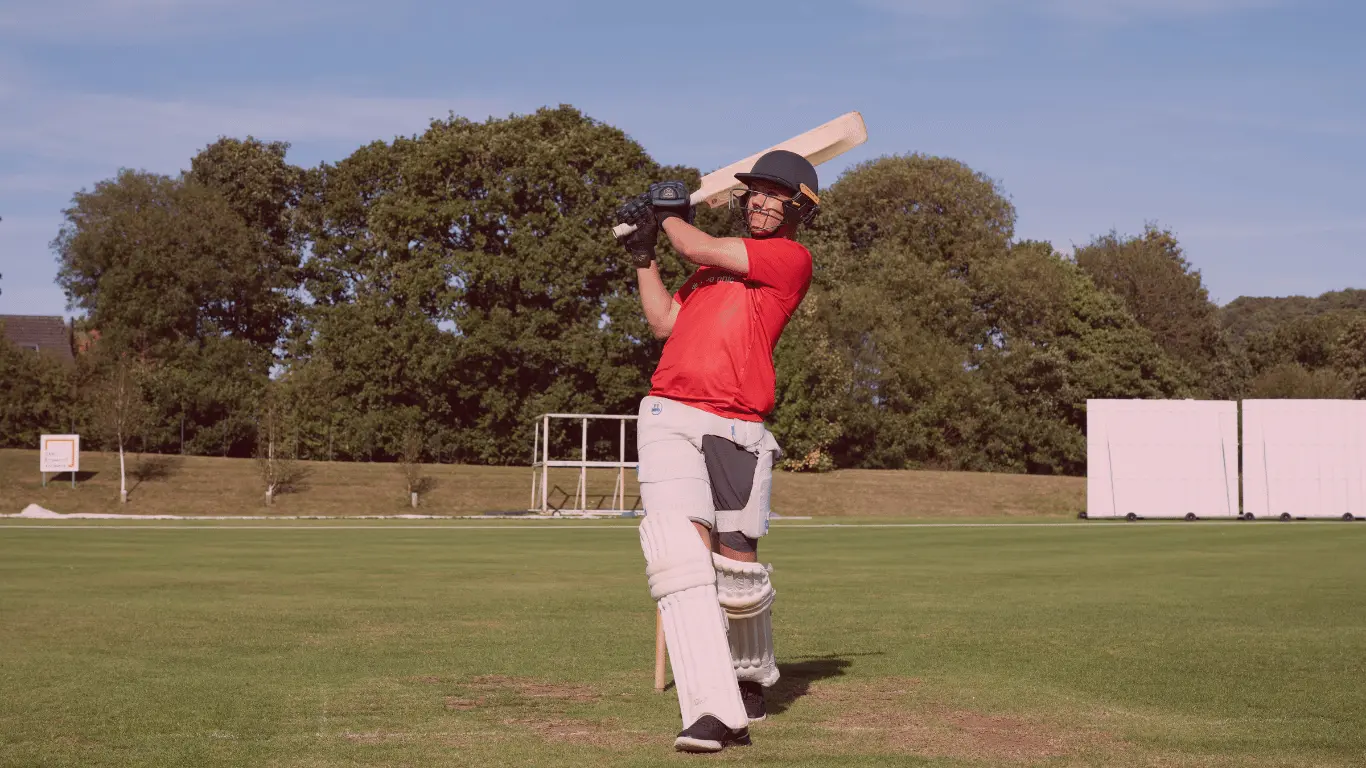
Bat speed is not created by the hands alone. If you want to hit the ball further and clear the ropes more often, the real engine sits through the middle of your body. Rotational core strength is one of the key physical qualities that underpins power hitting in cricket.
When we look at the biomechanics of batting, the story is consistent. Force is generated from the ground, transferred through the hips and trunk, and finally expressed through the arms and into the bat. The quality of that transfer largely determines how much bat speed you can produce. Research in cricket now shows that trunk and pelvis interaction plays a meaningful role in predicting bat speed, and that physical qualities related to rotational power are associated with hitting performance (Peploe et al., 2019; Hardy et al., 2025a). The mechanism is strong. The causal training evidence in cricket is still emerging. But the direction of travel is clear.
What we mean by core in a batting context
When people hear core training, they often think of sit ups and six packs. In performance terms, that is not what we are talking about. In a batting context, the core is best understood as a functional system. The trunk musculature, including the obliques, rectus abdominis, transverse abdominis and spinal extensors, works together with the hips and pelvis to produce and control rotation.
There are several distinct but related qualities within this system. Rotational strength refers to the ability to generate high torque in axial rotation. Rotational power refers to how quickly that torque can be produced, which links closely to angular velocity and rate of force development. Anti rotation stability refers to the ability to resist unwanted trunk motion so that force generated by the lower body is not lost through excessive movement at the spine. Endurance refers to the ability to maintain trunk control across repeated swings or long innings.
In power hitting, we need all of these. Strength without speed is not enough. Power without control leads to energy leaks. Stability without rotation limits bat speed.
The strongest cricket evidence: separation and sequencing
High quality three dimensional motion capture research in cricket batting has shown that pelvis thorax separation at the start of the downswing is a key kinematic predictor of bat speed (Peploe et al., 2019). In that study, separation explained approximately 28 percent of the variance in bat speed during a range hitting task. When distal segment actions such as lead elbow extension and wrist uncocking were added to the model, the explained variance increased to around 78 percent. That reinforces a proximal to distal sequencing model. The trunk sets the conditions. The arms and wrists finish the job.
Comparative work between skilled male and female batters has shown that greater pelvis thorax separation at the start of the downswing is associated with higher bat speed and carry distance (McErlain Naylor et al., 2021). While this does not prove that increasing separation will automatically increase bat speed, it supports the idea that trunk pelvis interaction is performance relevant.
Moving from technique to physical capacity, Hardy et al. (2025a) examined 29 professional female cricketers and reported that overall bat speed across multiple shots and delivery types was associated with upper body pulling strength and a rotational medicine ball velocity test. Bench pull strength correlated with bat speed at r equals 0.70, and rotational medicine ball push velocity correlated at approximately r equals 0.60 to 0.65. A regression model explained around 53 percent of the variance in overall bat speed. This tells us two things. Physical qualities matter. They do not explain everything.
Mechanism: how the kinetic chain produces bat speed
The most defensible explanation for why rotational core training matters is mechanical, not cosmetic. Bat speed emerges from the kinetic chain. Ground reaction forces are generated through the feet. The pelvis begins to rotate. The trunk follows, often with a brief period of separation where the pelvis rotates ahead of the thorax. That separation may allow a stretch shortening effect within trunk musculature, increasing rotational velocity during the downswing (Peploe et al., 2019). The arms then accelerate, followed by wrist uncocking, and bat speed peaks close to impact.
If the trunk is too loose, energy leaks. If it is too stiff or poorly timed, separation is limited and sequencing breaks down. The core acts as both a transmission system and a control system.
Evidence from baseball reinforces this transfer concept. Lead foot ground reaction forces have been shown to correlate with bat speed, with resultant ground reaction force showing correlations of around r equals 0.66 in collegiate players (Orishimo et al., 2024). While this is not cricket, the mechanical logic transfers. The lower body generates impulse. The trunk must manage and transmit it.
Training studies: what improvements are realistic
When we look at intervention studies across striking sports, improvements in swing related outcomes after core focused training are typically modest but meaningful. In golf, an eight week isolated core strength and stability programme produced approximately a 3.6 percent increase in clubhead speed compared to control (Weston et al., 2013). In high school baseball players, a six week core resistance training programme improved exit velocity by around 4.4 percent, while the control group did not show a clear improvement (Felion & DeBeliso, 2020). In female high school softball players, a seven week integrated kinetic chain resistance training programme increased bat swing speed by approximately 10 percent, although youth samples may respond differently due to training age and maturation (Palmer & McCabe, 2023).
The key message is this. Rotational core training can improve swing related outputs. The gains are often in the range of a few percent over six to ten weeks. In high level players, even a small percentage increase in bat speed can meaningfully affect carry distance and boundary frequency.
Measuring rotational power properly
If you are going to train rotation, you should also measure it properly. Hardy et al. (2025b) compared a velocity based medicine ball rotational push test with a distance based version. The velocity based test demonstrated excellent accuracy and reliability, with intraclass correlation coefficients around 0.97 for accuracy and 0.94 for reliability. The distance based method showed poor accuracy and meaningful bias. For coaches with access to radar, measuring rotational medicine ball throws by velocity rather than distance is more defensible and aligns with the cricket bat speed association evidence.
Exercise selection: what matches the evidence
Your exercise selection should reflect the qualities discussed earlier. Anti rotation work such as Pallof holds and isometric pushes develops the ability to resist unwanted trunk rotation and build endurance. This supports force transfer and fatigue resistance, especially in long innings.
Rotational strength exercises such as cable woodchops or diagonal lifts allow you to produce torque through a pattern that resembles the swing plane. In golf, swing specific woodchop strength has been shown to correlate with clubhead velocity (Keogh et al., 2009), supporting the value of diagonal strength patterns.
Strength to power bridge exercises such as landmine rotations allow you to integrate hip drive, trunk rotation and upper body force production. Finally, high velocity medicine ball rotational throws target angular velocity and rate of force development, which are critical in time constrained striking actions. Acute studies in baseball show that rotational medicine ball throws can transiently enhance bat speed and exit velocity, reinforcing the plausibility of explosive rotational work in preparation phases (Buso et al., 2023).
Programming considerations for batters
A sensible progression begins with trunk control and anti rotation stability. Once control is established, rotational strength can be developed through heavier diagonal patterns. Power work follows, using light loads moved with maximal intent. Integrated step behind or split stance throws can then link lower body impulse with trunk rotation.
Importantly, strength work should complement skill practice. Bat speed is not purely a function of strength. Timing, perception, action coupling and contact quality remain central determinants of performance. Physical training supports these qualities; it does not replace them.
Limitations in the current evidence
The strongest biomechanical evidence in cricket supports trunk pelvis separation and sequencing as predictors of bat speed (Peploe et al., 2019; McErlain Naylor et al., 2021). There is now cricket specific correlational evidence linking rotational medicine ball velocity and strength measures to bat speed (Hardy et al., 2025a). However, there is a lack of randomised controlled trials in cricket directly testing whether rotational core training increases bat speed in competitive settings.
Correlation does not equal causation. Stronger players may train more, have better technique, or possess favourable anthropometry. Swing outcomes are influenced by multiple interacting factors. Therefore, claims should remain proportionate to the evidence.
Final summary
Rotational core strength and power play a meaningful role in batting performance. The biomechanics are clear. Pelvis thorax separation and proximal to distal sequencing predict bat speed. Physical qualities such as rotational medicine ball velocity and upper body pulling strength are associated with bat speed in elite female cricketers.
Training studies across striking sports show that focused rotational and core programmes can produce modest but meaningful improvements in swing related outcomes over six to ten weeks. The biggest returns appear when training integrates stability, strength and power rather than relying on isolated abdominal work.
If your goal is to hit the ball further, rotational core training should not replace skill practice, but it should sit alongside it. Train the system that transfers force from the ground to the bat, and you give yourself the physical capacity to express higher bat speed when timing and contact allow.
References
Buso, D., Willardson, J. M., & Shafer, A. B. (2023). Effects of medicine wall ball throws with whole body vibration on bat swing performance in collegiate baseball players. Journal of Strength and Conditioning Research.
Felion, C. W., & DeBeliso, M. (2020). The effects of core training on high school baseball players. Athens Journal of Sports, 7(3), 179–192.
Hardy, S. G. J., Edwards, K. M., & Freeston, J. (2025a). The physical determinants of bat speed in elite female cricketers. International Journal of Sports Physiology and Performance.
Hardy, S. G. J., Stelzer Hiller, O. W., Edwards, K. M., & Freeston, J. (2025b). Criterion validity and reliability of a new medicine ball rotational power test. Journal of Strength and Conditioning Research.
Keogh, J. W. L., Marnewick, M. C., Maulder, P. S., Nortje, J. P., Hume, P. A., & Bradshaw, E. J. (2009). Are anthropometric, flexibility, muscular strength, and endurance variables related to clubhead velocity in low and high handicap golfers? Journal of Strength and Conditioning Research, 23(6), 1841–1850.
McErlain Naylor, S. A., Peploe, C., Grimley, J., Deshpande, Y., Felton, P. J., & King, M. A. (2021). Comparing power hitting kinematics between skilled male and female cricket batters. Journal of Sports Sciences, 39(19), 2192–2201.
Orishimo, K. F., Kremenic, I. J., Modica, E., Fukunaga, T., McHugh, M. P., & Bharam, S. (2024). Lower extremity kinematic and kinetic factors associated with bat speed at ball contact during the baseball swing. Sports Biomechanics.
Palmer, T. G., & McCabe, M. (2023). The effect of a novel weight supported kinetic chain resistance training program on proximal core muscular endurance, trunk to arm muscular power, and bat swing speed. Journal of Strength and Conditioning Research.
Peploe, C., McErlain Naylor, S. A., Harland, A. R., & King, M. A. (2019). Relationships between technique and bat speed, post impact ball speed and carry distance in cricket batting during a range hitting task. Human Movement Science, 66, 52–62.
Weston, M., Coleman, N. J., Spears, I. R., & et al. (2013). The effects of eight weeks core strength and stability exercises on club swing speed in male golfers. Journal of Sports Sciences, 31(14), 1540–1547.


