


How to improve your batting footwork speed


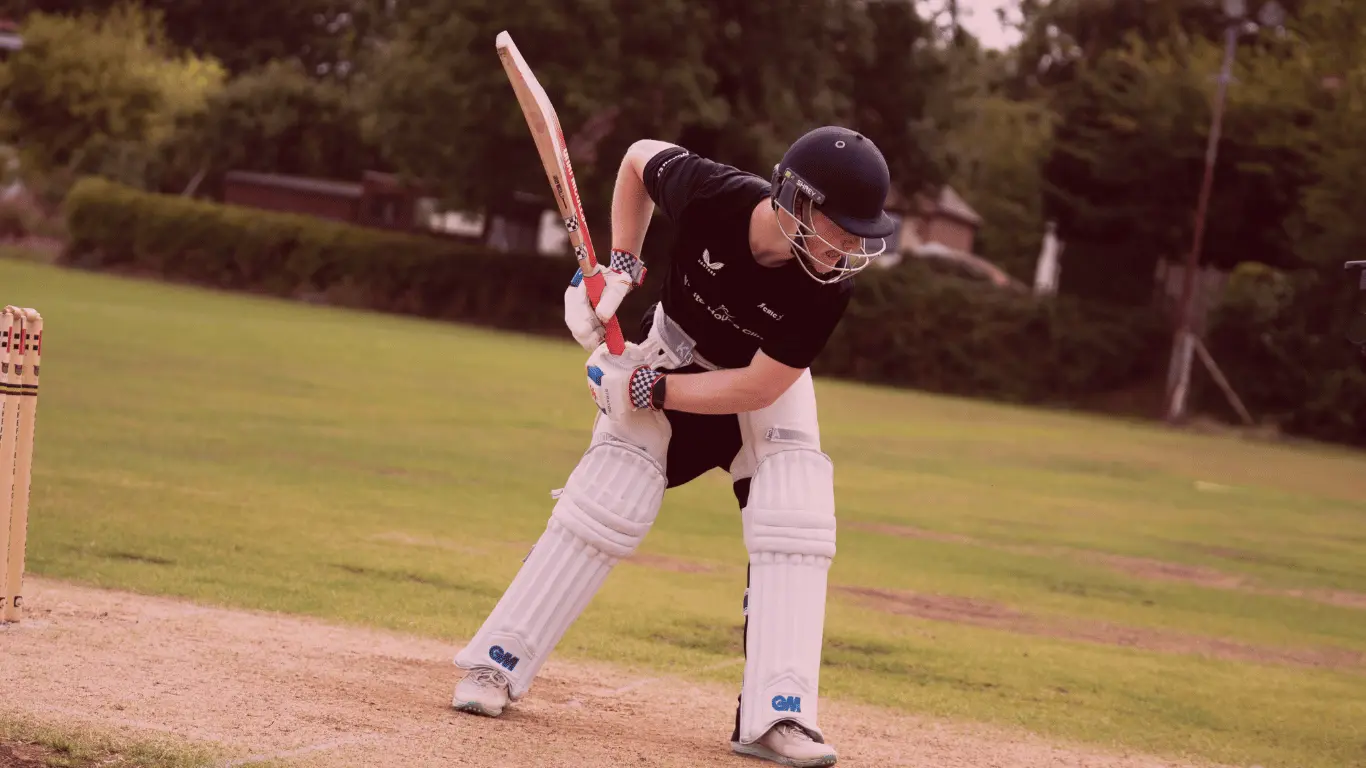
If you want to improve your batting footwork, the answer is not just technical throwdowns or shadow practice in front of a mirror. Smooth, flowing footwork starts with physical qualities. When parents tell me their child looks stuck in the mud at the crease, or when adult players say they feel heavy on their feet, the issue is often not a lack of effort. It is usually a lack of specific strength and reactivity.
Footwork is rhythm. When you watch great batters, they almost look like boxers moving around the ring. They are light, balanced and ready to go in any direction. When you are out of nick, footwork is often the first thing that disappears. My job as a strength and conditioning coach is not to change your technique, but to give your body the tools that allow your technique to show up under pressure.
There are three big physical areas that underpin good batting footwork. These are isometric strength, reactive strength and agility. If you build these properly, you will feel quicker, sharper and more controlled at the crease.
The hidden foundation
When most people ask how to improve footwork in cricket, they expect to hear about ladder drills or fancy cone work. Often, the real answer is much simpler. Before we worry about how quickly you can move, we need to ask whether you can control and hold the positions that batting demands.
Take a split stance and raise your front heel off the floor and hold it. Can you keep your balance? Can you keep the knee stable? Can you hold that position for sixty seconds without shaking? Many players cannot.
An isometric calf raise in a split stance is a simple but powerful exercise. It challenges the calf, Achilles, ankle and intrinsic foot muscles all at once. It also demands knee stability. If you cannot hold that position comfortably, you are unlikely to be reactive and explosive when the ball is released. Strength and stability lay the foundation for speed.
This is especially important in young players. Often they want to skip straight to dynamic drills, but without basic strength through the foot and ankle, reactive work becomes sloppy and ineffective. If you want to feel light at the crease, you first need to earn the right to be reactive.
Reactive strength
Once foundational strength is in place, the next quality to develop is reactive strength. Reactive strength is your ability to absorb force and then rapidly produce force. In simple terms, it is how quickly you can go from landing to exploding.
In sports science, this is often measured using a drop jump and something called the reactive strength index. You step off a box, hit the ground, absorb the landing and then jump as high as possible with minimal ground contact time. The better you are at transitioning from eccentric loading to concentric force production, the higher your reactive strength.
When you are batting, you constantly need to absorb and produce force. You might push back into your crease for a short ball or skip down the track to a spinner. If you cannot switch quickly from loading to exploding, you will feel heavy and slow.
To build this quality, plyometrics are essential. Plyometrics can be split into two categories. Extensive plyometrics are lower intensity, rhythmical movements performed at higher volume. These might include small hops, alternating pogo jumps or side to side bounds. They build capacity and condition the calf ankle foot complex.
Intensive plyometrics are higher impact and lower volume. These include drop jumps, maximal pogos, repeated counter movement jumps or broad jumps with sharp ground contacts. These challenge your ability to produce force quickly and efficiently.
Many cricketers skip this area entirely. They might lift weights, they might practise batting, but they never train the stretch shortening cycle properly. Then they wonder why they feel sluggish on their feet.
Why plyometrics improve batting footwork
Batting footwork is not just about moving your feet. It is about how quickly you can push into the ground and redirect your body. Plyometrics improve your ability to generate force in short time windows. That is exactly what batting demands.
Extensive plyometrics are a great place to start. You can include them in your warm up. A minute or two of rhythmical hopping, forwards and backwards, side to side, conditions the lower limb and builds resilience. Over time, you can introduce more intensive drills once the foundation is strong.
The key is progression. Do not jump straight into high box drop jumps if you cannot control basic pogo hops. Build capacity first, then build intensity. That is how you turn heavy feet into reactive ones.
Agility
Agility is often confused with change of direction. True agility is a rapid whole body movement in response to a stimulus. Batting is a perfect example of agility. You react to line and length and adjust your footwork accordingly.
Many so called agility drills are actually pre planned patterns. If you know in advance where you are going to move, you are training coordination and change of direction, not agility. That is not a bad thing, but it is not the same.
To train agility properly, you need a stimulus. This could be a visual cue, an audio cue or a partner calling instructions at random. For example, from your batting stance, you could have coloured markers placed around you. A partner calls out a colour and you react immediately, stepping and tapping that marker before returning to your stance.
Another useful drill is a snap down variation. You reach up tall and on a random cue, you snap into a specific stance position. Because you do not know what is coming, your brain and body have to organise quickly. This is much closer to the demands of batting than running through a fixed pattern.
Agility training connects the physical qualities you have built with the decision making demands of cricket. It is where strength and reactivity meet perception and reaction.
Do ladder drills actually improve batting footwork
This is a common question. Ladder drills are popular in cricket training, especially with young players. They can be useful, but only if you understand what they are doing.
Ladder drills primarily improve coordination, rhythm and foot placement accuracy. They encourage sharp, precise movements and good intent. They do not automatically improve agility because most ladder drills are pre planned. You know exactly where your feet are going.
If you want to make ladder work more agility focused, you need to add a stimulus. Have someone call patterns at random or use visual cues to dictate direction. Without that element, you are working on coordination rather than true agility.
Ladders are a tool. They are not magic. Used properly, they can complement a programme. Used in isolation, they will not transform your footwork.
Putting it all together
If you want to improve your batting footwork, focus on three pillars. First, build isometric strength and stability through the calf, ankle and foot. If you cannot hold positions, you cannot move out of them effectively. Second, develop reactive strength through progressive plyometrics. Train your ability to absorb and produce force quickly. Third, train agility by responding to real stimuli rather than rehearsed patterns.
When these qualities come together, you start to feel lighter, sharper and more in control at the crease. Footwork becomes smooth rather than forced. And when your feet move well, your timing often follows.
At Cricfit, plyometrics and agility work form a big part of our batting programmes because they address the physical qualities that underpin technical skill. If you want to feel quicker on your feet this season, start by building the engine that allows your technique to shine.


