


Cricket Elbow Pain When Throwing: What It Is and How to Fix It


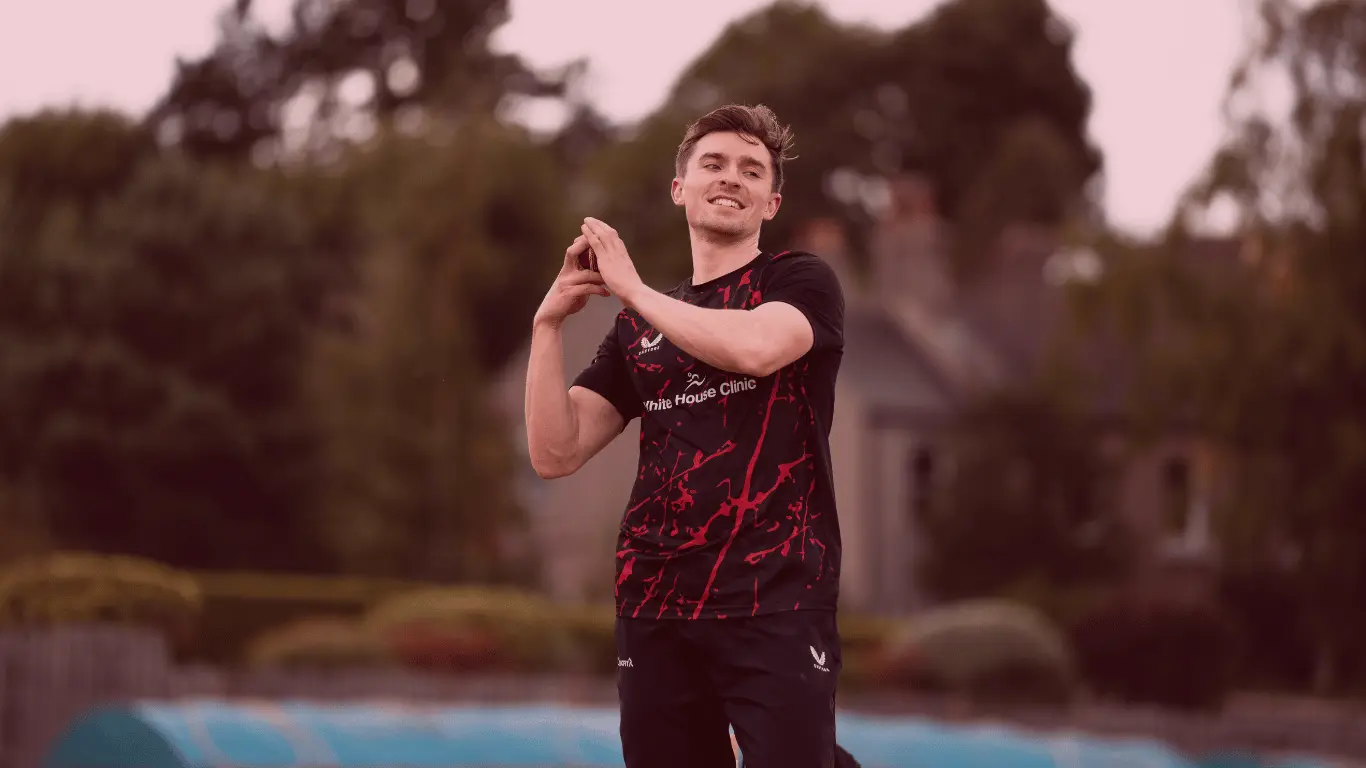
If the inside or outside of your elbow is pinching or hurting when you throw or bowl, you are dealing with one of the most common overuse injuries in cricket, and it is fixable. This article walks you through the two common types of elbow pain cricketers get, why they happen, and the three-part framework I use with my cricketers to sort it out.
The reason elbow pain gets ignored so often is honest but silly. If the same pain was in your knee, you would feel it every step you took and you would do something about it. Because it is in your elbow, and you only really feel it when you throw or bowl, most cricketers just play through it until it becomes a real problem. Do not do that.
Tennis elbow versus golfer's elbow
The simplest possible explanation. Pain on the outside of your elbow is tennis elbow. Pain on the inside is golfer's elbow, which the Americans call pitcher's elbow when they see it in baseball. That is all you need to know to identify what you have.
In cricket I see both. If the pain has come on from throwing or bowling, it is usually on the inside. If it has come on from gripping the bat hard, it is usually on the outside. The label matters less than the cause, because the underlying story is nearly always the same.
Why cricketers get elbow pain
Ninety-nine per cent of pain in cricket is overuse. Elbows, knees, shoulders, backs, all the same. It is a high volume sport and the vulnerable joints are the ones that get asked to do more than they are ready to do.
The specific reason elbows get inflamed is worth understanding. The human body works on a rough principle where every joint either wants mobility or stability. Ankles want mobility, knees want stability, hips want mobility, lower back wants stability, thoracic spine wants mobility, shoulder wants mobility, wrist wants mobility, elbow wants stability.
Look at that list and you can spot the pattern. The joints that get injured most often are the ones that want stability. The elbow, the rotator cuff and scapular region, the lower back and the knees. Because when the joint above or below is not doing its mobility job, the stable joint has to give up some of its stability to compensate.
For the elbow specifically, that means the wrist below and the shoulder above. If your wrist is locked up and cannot flex, extend or rotate through range, your elbow starts moving in ways it should not to make up for it. If your shoulder cannot reach overhead cleanly, or cannot rotate internally and externally through full range, again your elbow picks up the slack. Do that for thousands of throws in a row over a season and the tendons around the elbow start complaining.
That is why the fix for elbow pain almost never starts at the elbow. It starts at the wrist and the shoulder, and works inwards.
The Big Three
Three areas to focus on. Mobility, stability and strength. Get all three right and elbow pain usually clears up. Miss one and you tend to keep going round in circles.
Mobility
Start at the wrist. How often do you actually do wrist mobility work? For most cricketers the honest answer is never. That has to change. Flex the wrist, extend it, deviate side to side, rotate it in both directions, and use your other hand to peel the fingers gently back into extension. Two or three minutes a day is enough to make a difference within a couple of weeks.
Then move up to the shoulder. You want to be able to reach overhead cleanly with a straight arm and no compensation. A child's pose and a good dead hang from a bar are two of the easiest ways to open the shoulder up. On top of the overhead reach, you also need internal and external rotation through range. Prone external rotations, sleeper stretches and simple arm circles all cover it.
If the wrist and the shoulder are moving how they want to, the elbow stops being asked to compensate. Half the battle is won.
Stability
Stability for the elbow is really stability for the rotator cuff. The four small muscles that sit around the shoulder joint are what stop the throw from tearing your arm off.
Think of it this way. The front of your body is your accelerator. Pecs, front delts, the muscles you use to generate throwing speed. The back of your body is your braking system. Rotator cuff, rhomboids, rear delts, the muscles that decelerate the arm safely after release. If your accelerator is stronger than your brakes, something has to give. Usually it is the rotator cuff first, and then the elbow starts picking up the slack downstream.
For rotator cuff work, most cricketers stop at a couple of banded external rotations. Those are fine but they are not the whole answer. You want internal and external rotation through range, plus press variations, pull variations, and scap work that lets the shoulder blade slide freely around the ribcage. Push ups, pull ups, rows, prone raises and prone external rotations all belong in the mix.
A shoulder that can properly decelerate a throw is a shoulder that keeps the elbow out of trouble.
Strength
The final piece is whole kinetic chain strength. Elbow pain is almost never a bicep and tricep problem, but that is where most cricketers look first when they start doing rehab work.
Think of the elbow like the knee. The knee is a stable joint that lives between a mobile ankle and a mobile hip, and its control comes from the big muscles further upstream. Your glutes and quads do most of the work that keeps the knee healthy. The elbow works the same way. The big muscles further upstream, the pecs, lats, traps, rhomboids and delts, do most of the work that keeps the elbow healthy.
That does not mean you skip the biceps, triceps and forearms. They matter and they are part of the chain. But if all you do is a few sets of curls and pushdowns and you never train the shoulder and back, the elbow is not going to feel better.
One quick rule of thumb. Do more pulling than pressing. Most cricketers, and most people who go to the gym, press too much and pull too little. Rows, pull ups and pull downs balance out all the throwing and bowling and pressing you already do, and take a load off the elbow.
What to actually do next
If you take one thing from this article, let it be this. The fix for elbow pain in cricket rarely starts at the elbow. Mobilise the wrist, mobilise the shoulder, build a strong and balanced rotator cuff, then layer good whole-body strength on top. Do that consistently for three or four weeks and most elbow pain in amateur cricketers starts to settle.
If it does not settle, or if the pain is sharp rather than a dull ache, get in front of a physio. There are elbow issues that need proper assessment and this article is not a replacement for that.
Where Cricfit fits in
Shoulder health is baked into every Cricfit programme, because every cricketer throws and every cricketer needs the rotator cuff, the scap and the whole back side of the body to work properly. On top of that we cover bicep, tricep and forearm work so the full kinetic chain around the elbow is trained, not just the flashy bits.
If you want a programme that handles all of this without you having to build it yourself, the Cricfit specialist programmes are the answer.


