


Fast Bowlers Achilles Training


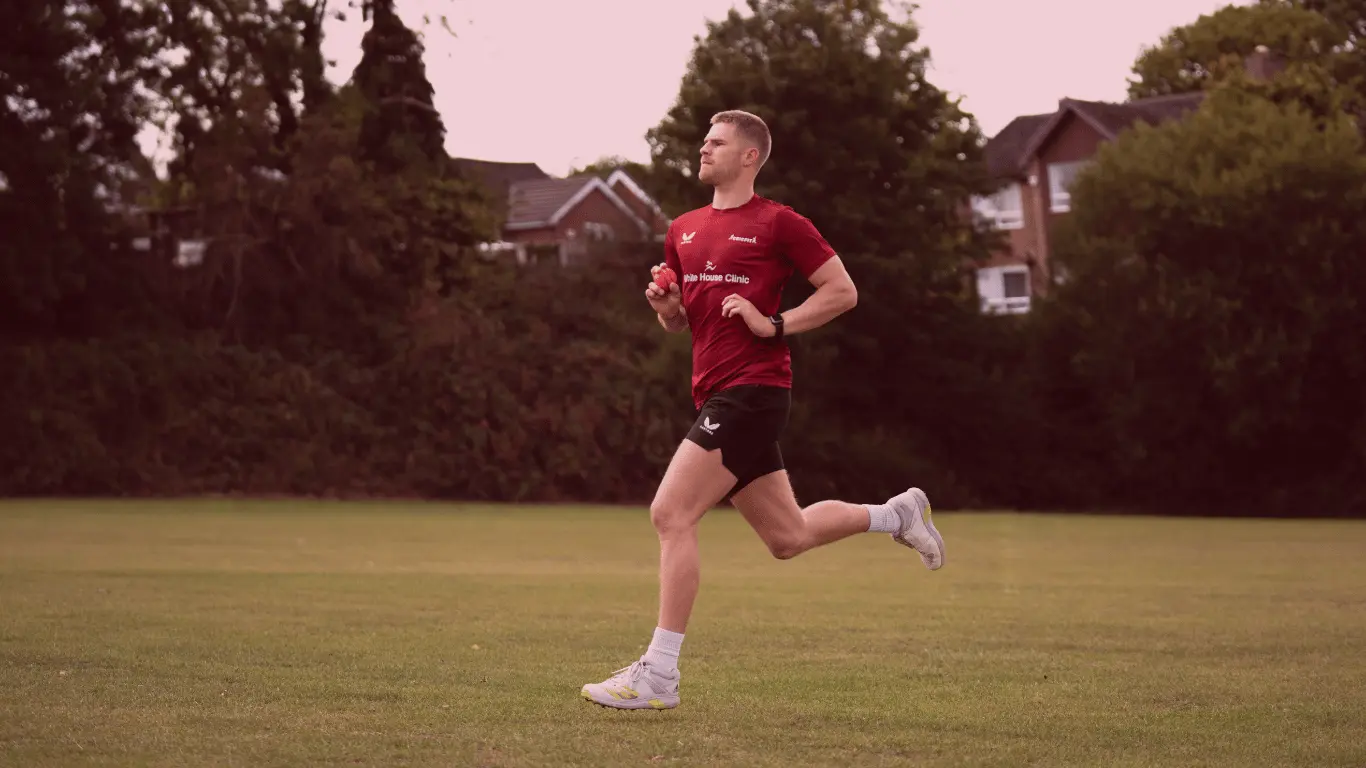
If you are a fast bowler and you are not training your Achilles tendon, you are likely leaving pace on the table and increasing your risk of injury. Most players focus on hamstrings, core or shoulders, and while all of those matter, one of the biggest missing pieces in fast bowling training is right at the bottom of the body.
The Achilles tendon is one of the most important structures for fast bowlers, yet it is often overlooked. It acts like a spring, helping you absorb force and then reproduce it quickly. When it is strong and reactive, it allows you to move through the crease with speed and efficiency. When it is weak or poorly trained, you lose energy and increase your chances of breaking down.
After working with hundreds of fast bowlers, this is one of the most common gaps I see when players first start structured training.
Why the Achilles Tendon Matters for Fast Bowling
Fast bowling places huge demands on the body. At front foot contact, forces can reach five to ten times bodyweight. What is often missed is the importance of back foot contact.
As you run in, you gather and land on your back foot before transitioning into your delivery stride. The goal here is simple. You want to transfer as much momentum from your run up into your front foot contact as possible. To do that, you need to spend as little time on the ground as possible and avoid collapsing.
This is where the Achilles tendon becomes crucial. It acts like a spring at the bottom of your body. When you land, it stores energy and then releases it, helping you move forward and upward into your delivery. If that spring is not working properly, you lose momentum, your action becomes slower, and your bowling speed drops.
The Achilles Does Not Work Alone
While the Achilles tendon is the focus, it does not work in isolation. It is part of a system that includes the calf, the foot, the ankle and even the knee. If one part of that system is weak or restricted, other areas have to compensate.
This is why a full approach is needed. If your calf is weak, your Achilles will take more load than it should. If your foot is not strong or stable, you will struggle to control force as you hit the ground. If your ankle lacks mobility, your movement options become limited and compensation occurs further up the chain.
To build a strong Achilles, you need to build the entire lower limb properly.
Building Calf Strength
The first step is developing calf strength. The calf muscles support the Achilles and help manage the forces that pass through it.
Many players only train the calf with straight leg exercises, which mainly target the gastrocnemius. However, the soleus, which is worked more with a bent knee, is just as important. Both need to be trained.
A simple place to start is with isometric calf raises. Holding a split stance position and raising the heel off the floor builds strength and control through the calf and Achilles. Over time, this can be progressed with added load or by moving into full range calf raises.
The key is not to be afraid of loading this area. The forces experienced during running and bowling are high, so your training needs to prepare you for that.
Do Not Neglect the Foot
The foot is often ignored, but it is the only part of the body in contact with the ground. It contains a large number of muscles that contribute to stability and force production.
Stronger feet improve balance, control and force transfer. Simple exercises like single leg balance, toe control drills and barefoot training can make a noticeable difference.
When the foot is strong, it reduces unnecessary load on the Achilles and allows the entire system to function more effectively.
Ankle Mobility
Ankle mobility plays a key role in how forces are absorbed and produced. If the ankle is stiff, the body has fewer options when landing and moving, which can lead to compensation elsewhere.
Improving ankle mobility allows smoother movement and reduces excessive strain on the Achilles and calf. It is not about forcing extreme ranges, but about ensuring you have enough movement to perform efficiently.
Once mobility is improved, strength work should reinforce that new range so it becomes usable under load.
Why Plyometrics Are Essential
Once the foundation of strength and mobility is in place, the next step is developing power. This is where plyometric training comes in.
Plyometrics involve jumping and hopping movements that train the stretch shortening cycle. This is the same load and explode mechanism that the Achilles tendon uses during the bowling action.
Lower intensity plyometrics, often called extensive plyometrics, help build capacity. These include simple hops, pogo jumps and multi directional movements. They prepare the tendon for higher loads.
Higher intensity plyometrics, known as intensive plyometrics, focus on producing maximum force in short time periods. These might include maximal jumps or drop jumps. The goal here is to minimise ground contact time and maximise output.
For fast bowlers, this is one of the most effective ways to improve reactivity and ultimately bowling speed .
The Importance of Load Management
One of the biggest mistakes players make when training tendons is doing too much too soon. Tendon injuries, such as Achilles tendinopathy, often come from poor load management rather than a single incident.
The key is gradual progression. Start with basic strength work, build capacity with lower intensity plyometrics, and then progress to higher intensity work over time.
Consistency is more important than intensity. Small, regular progressions lead to long term improvements, while sudden spikes in load often lead to setbacks.
Final Thoughts
If you are serious about increasing your bowling speed and staying injury free, you cannot ignore the Achilles tendon. It is a key part of how you absorb and reproduce force, especially at back foot contact.
By building strength through the calf, improving foot stability, developing ankle mobility and progressing into plyometric work, you create a system that allows you to move through the crease with speed and control.
The result is not just more pace, but a more efficient and resilient bowling action.
At Cricfit, this is built into our fast bowling programmes so you do not have to guess what to do or when to do it. You just follow the plan, progress over time and know that your training is actually helping your performance on the pitch.


