


The Complete Guide to Cricket Strength and Conditioning (2026)


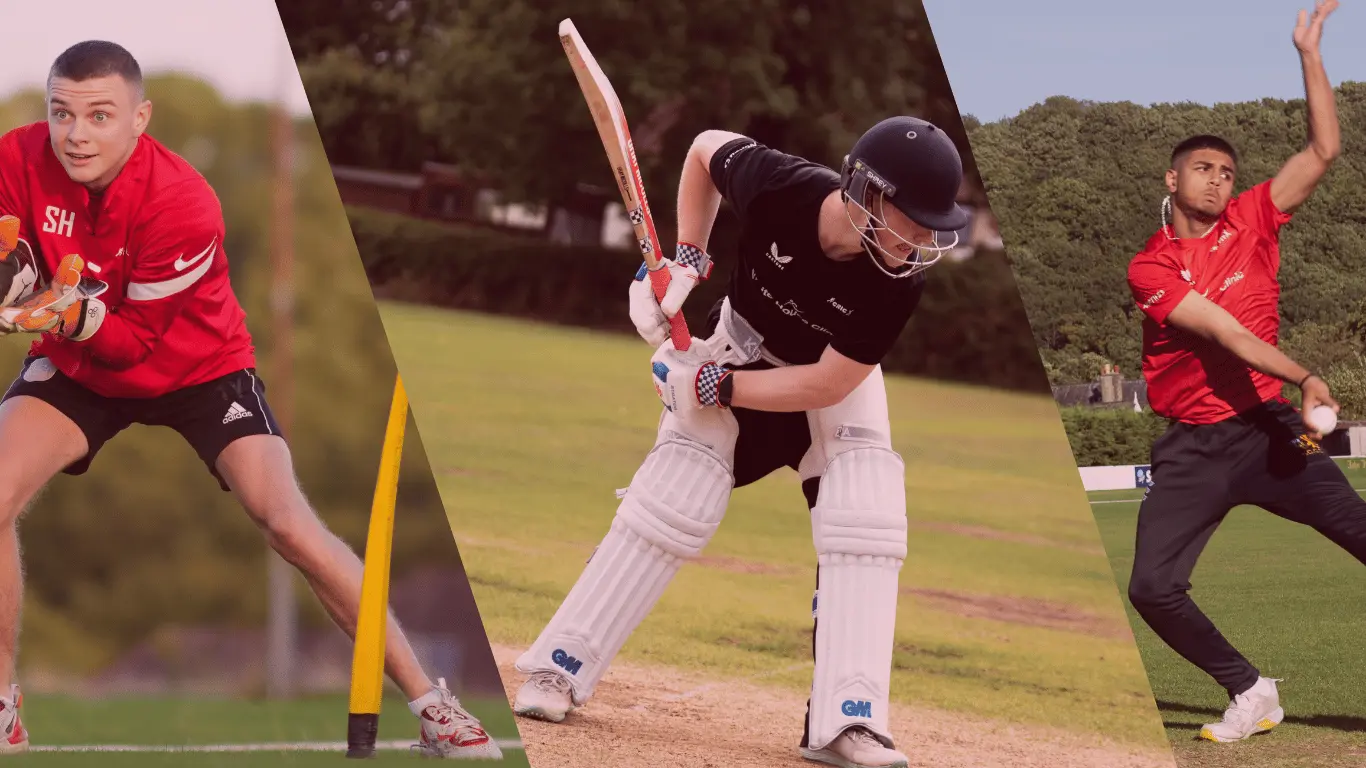
Cricket strength and conditioning is the sport-specific gym and fitness work that helps cricketers bowl faster, hit the ball harder and stay on the pitch. If you want a single, in-depth answer to how a cricketer should train their body in 2026, this guide is it. We cover the biomechanics of every role, the physical demands of every format, how training should shift by age and stage, the four pillars of cricket fitness, periodisation across the season, warm ups, workload, nutrition and recovery, the most common mistakes and the practical ways to actually get started.
This guide has been updated for the 2026 season and is written for cricketers, coaches and parents who want more than the generic fitness advice you get from a standard PT or a chat with an AI model. Everything below is grounded in the peer reviewed research,the ECB guidelines, and in what I have seen work with the hundreds of amateur and junior cricketers I have coached over the last six years running Cricfit.
If you already know the topic and just want the practical answer, skip to the four pillars section, then the "how to actually start training" section near the end. If you want the full picture, read straight through.
What is cricket strength and conditioning?
Cricket strength and conditioning is the practice of training the body specifically for the physical demands of cricket. It is the gap between generic fitness (running, gym sessions, weights, bootcamps) and cricket performance. A cricket S&C programme is built around what the game actually asks your body to do, which is rotate, brace, sprint, throw, decelerate, get back up and do it all again.
At its heart, cricket S&C has two jobs. The first is to make you a better cricketer, so faster, more powerful, more explosive and more durable when it matters. The second is to keep you fit and available to play. If you had to boil it down to one sentence, cricket strength and conditioning is what turns a cricketer into an athlete without losing what makes them a cricketer.
Why generic fitness training does not work for cricketers
Cricket is a rotational sport. Batting, bowling, throwing, keeping, all of it is built around the ability to transfer force through the hips, trunk and shoulders in sequence, at speed, in one direction. The vast majority of gym programmes and fitness classes are built around going up and down. Squats, lunges, deadlifts, presses, pulls. Those matter, and we use them, but on their own they are only a piece of the puzzle for a cricketer.
The second issue with generic fitness is the mix of energy systems. Cricket is not endurance running and it is not pure power. It is intermittent, with short bursts at high intensity separated by long stretches of low activity. Train it like a marathon and you lose speed. Train it like a sprint programme and you fade in a long spell. Train it like a footballer and you drift into demands that never happen in the middle.
That is why cricket S&C exists as a discipline. A good programme takes the fundamentals of strength and conditioning, then bends them to the specific job of playing cricket.
The physical demands of cricket by role
Every role in cricket has its own physical profile. If you are training well for one, you may still be leaving performance on the table for another. Here is how the demands break down across the five main roles.
Batting
Batting is a rotational power event. Power Hitting starts with the base (the feet driving into the floor), transmits through a braced front leg, releases through the hips and torso, extends through the top arm and finishes with the wrists. The bat is the last link in a long chain, and the ball travels as far as the chain is efficient. Peploe et al. (2019) found that three technique factors, the X factor (separation between the pelvis and upper torso at the start of the downswing), lead elbow extension and wrist uncocking, explained around 78 per cent of the difference in maximum bat speed between players.
The physical requirements that follow are lower body strength (to drive the base), rotational power (to swing the trunk fast), triceps strength (to extend the top arm), grip and forearm strength (to snap the wrists) and enough thoracic and hip mobility to create the X factor in the first place. On top of that, a batter needs the repeat sprint ability to run between the wickets ball after ball without losing speed.
Fast bowling
Fast bowling is one of the hardest actions in sport for the body. It is high force, high speed, done on one side of the body, and repeated hundreds of times over a season. Biomechanically it is a transfer of momentum from the run up, through back foot contact, into a braced front leg that stops the lower body dead so the upper body can catapult over the top.
Fast bowlers need lower body strength to plant hard through the front leg. They need core strength to hold the trunk together through that catapult. They need shoulder mobility and rotator cuff strength so the arm can move through range at speed without breaking down. And they need robust workload management, because the physical demand of the action is huge. Alway et al. (2019) tracked 368 English county fast bowlers over six years and found that bowling more than 234 balls (39 overs) in a seven day window sharply raised the risk of a lumbar stress fracture. Keylock et al. (2022) went one step further and scanned 40 adolescent fast bowlers, half of whom had a lumbar bone stress injury at baseline without pain. The message is that fast bowling breaks down bodies that are not physically prepared and workload managed.
Spin bowling
Spinners often get left out of the S&C conversation. They should not be. A spinner's action is less brutal than a quick bowler's, but there is still huge rotational demand through the trunk.
Spinners bowl more overs in a season than any other type of bowler in the professional game, so their conditioning has to be dialled in. Do not skip the strength work because you think spinners do not need it.
Wicket keeping
Wicket keepers are the athletes of the team. They squat down hundreds of times an innings, they cover ground laterally more than anyone else, they dive for catches, they throw from awkward positions, and they still have to bat. The physical profile they need is unusual. Deep squat mobility (ankles, hips and thoracic spine), lateral power off both legs and quick change of direction (usually via a drop step).
If you are a keeper who does not train, you are limiting your career and your fitness. If you train like a batter without adding lateral power and mobility, you are missing the parts of the game that make keepers special.
Fielding
Fielding is the invisible S&C category. Every player in the team does it. Every player benefits from being better at it. The physical demands are repeat sprint ability, reactive agility (reading the ball off the bat and moving fast in the right direction), throwing power from awkward positions, and the strength and control to dive and get back up without injury.
The single most underrated fielding attribute is throw distance. It is a mix of shoulder strength, external rotation range and trunk power. Sprint speed and change of direction round out the profile.
The physical demands of cricket by format
Different formats put different demands on the body. Understanding which formats you play most helps you shape your training year.
Test and multi-day cricket
Multi-day cricket is a stamina game punctuated by short bursts of high intensity. You have to stay on the pitch for long days, keep concentrating, and still explode into a run, a shot, a spell or a dive at any moment. Aerobic base matters more than in the shorter formats. Recovery between days matters more still. If you play four day cricket, add a proper aerobic conditioning block to your winter and pre-season work, and take recovery, sleep and nutrition seriously between innings.
One-day cricket
The 50 over game sits in the middle. Petersen et al. and other researchers have shown that heart rate averages in one-day cricket sit around 152 bpm for batters, 148 for medium-fast bowlers, 125 for spinners and 116 for fielders. That is not marathon territory, but it is enough that a poor aerobic base costs you. The high intensity moments are still what wins games, so power and speed remain the priority, with conditioning as the base underneath them.
T20 cricket
T20 is a repeat power event with very little downtime. Batters need every ounce of bat speed. Bowlers get through their four overs in short spells, but under real intensity. Fielders sprint, dive and throw more per over than in any other format. The physical demand is closer to a team sport like football than to traditional cricket. If T20 is your main game, weight your training towards power, speed, repeat sprint ability and rotational strength, with just enough aerobic work to recover between overs.
The Hundred and other short formats
The Hundred and other shortened formats are basically T20 turned up further. Same principles apply, just with even less rest between efforts. This is where the biggest gap opens up between amateur cricketers and pros, because the pros have trained their power systems for years.
Cricket strength and conditioning by age and stage
Different ages should train differently. This is where most home and club-level training goes wrong, because a 13 year old is often given the same programme as a 19 year old, and neither is right.
Juniors, 9 to 13
Junior cricketers are still growing and still developing. The priority is movement quality, general athleticism, and building a base of strength and mobility that everything else can be layered onto later. That means bodyweight work, mobility, basic jumping and landing, running and change of direction, and light strength work with good technique.
They should be learning how to squat, hinge, push, pull, brace and rotate cleanly. Get those movements right, add load progressively, and you build a body that is ready for the more specialised work as they get older. Workload management matters even more at this age. The ECB fast bowling directives are strict on volumes for a reason.
Teenagers, 14 to 18
The 14 to 18 window is when serious S&C starts paying off. The body is capable of proper strength training, the game gets harder, and if you want to push into representative cricket, you need the physical base. Keep building strength, power and speed, and treat workload as seriously as any professional would.
Adult club cricketers
The 20s and 30s club cricketer usually has less time and more life demands. Programming has to work around jobs, families and the fact that most people are training two or three times a week at best. That is fine. Two focused gym sessions and one running or on-pitch session a week can move the needle enormously if the programme is right. The priority for most adults is strength, power and mobility, because those are the areas that fade first with age and desk work.
The four pillars of cricket fitness
The whole of cricket S&C comes down to four pillars. Get all four in place and you have a proper training programme. Miss one and you are leaving performance on the table.
Strength
Strength is the base of everything. It is the fuel in your tank. Without adequate strength, there is nothing to convert into power or speed. Cricketers who do not lift weights (or at least train their bodyweight seriously) are almost always leaving speed and power on the table. Big compound lifts like squats, deadlifts, split squats, presses and pulls belong in every serious cricketer’s programme, adjusted for age and experience.
Power
Power is strength expressed at speed. It is what actually delivers a fast ball or a big shot. Power is trained with lighter loads moved fast (Olympic lift variations, jumps, throws, med ball work) and with plyometrics that develop rate of force development. This is the pillar most amateur cricketers skip, and it is the pillar that most obviously separates a fit cricketer from an athletic one.
Speed
Speed matters everywhere. In the run up, between the wickets, in the field. Real speed work is short, sharp and rested. Sprint intervals of 10 to 30 metres, change of direction drills, and enough recovery to actually run at top pace. Long distance running does not build speed, and often takes it away.
Robustness
Robustness is the catch-all for the qualities that keep you on the pitch. Mobility, stability, tendon and joint durability, workload tolerance. It is the least sexy pillar and the one that most decides whether the other three ever get to be used. A strong, powerful, fast cricketer who cannot stay on the pitch is not a cricketer.
Periodisation and the cricket season
Periodisation is just planning your training year in phases, so the right kind of training is happening at the right time. For a UK cricket calendar, we split the year into three main phases.
Off-season (October to December)
The off-season is your strength phase. There is no cricket to be sore for, so this is where you push volume, build muscle, and get physically bigger and stronger. Compound lifts, higher volumes, gym focus.
Pre-season (January to March)
Pre-season is your power phase. Winter nets are starting, cricket is coming back into the picture, and the goal is to turn the strength you built in the off-season into speed and power on the pitch. Volume drops, intensity rises. More Olympic lift variations, plyometrics, sprints, med ball work.
In-season (April to September)
The in-season is your maintenance phase. Volume drops right down, intensity stays high. Two focused gym sessions a week is usually the sweet spot. The job is to hold onto everything you built in the off-season and pre-season while cricket is the main event. Chasing PBs mid-season is the single most common way to burn out or get injured just when it matters most.
Warm ups and readiness
Every session and every match should start with a proper warm up. The RAMP protocol (Jeffreys, 2006) covers what a good warm up has to do. Raise your body temperature, activate the key muscle groups, mobilise the key joints, and potentiate the nervous system so you are ready to move fast from the first ball.
Workload management and staying fit
Workload management is the single biggest lever for staying fit as a fast bowler, and it matters for everyone else in a lighter way. The ECB workload directives set out how many overs a bowler should be bowling in a week by age, and the research behind those numbers is unambiguous. Big spikes in workload lead to injury (Hulin et al., 2014). Bowling above a threshold for your age raises stress fracture risk (Alway et al., 2019). And every ball you bowl at match intensity in training counts, not just the ones in a match.
Nutrition and recovery
You cannot out-train poor nutrition or poor sleep. This is the section most cricketers skip and it is the section that separates the ones who progress from the ones who plateau.
Carbohydrates
Carbohydrates are the primary fuel for cricket. Aim for 2 to 5 grams of carbohydrate per kilogram of bodyweight per day if you have a moderate training load, and 4 to 7 grams per kg per day if your schedule is intense. On match day, load a carb-rich meal three to four hours before play, top up with a banana or a gel about an hour before, take on around 40 grams of carbs an hour during play through drinks, fruit or sweets, and refuel with carbs and protein after.
Protein
Protein is what repairs the training. Research recommends 1.6 to 2.0 grams per kilogram of bodyweight per day for training athletes. For an 80 kg cricketer that is 128 to 160 grams a day. Spread it across three or four meals, aim for around 30 to 40 grams per meal, and pull from a mix of animal and plant sources.
Hydration
Hydration is the fastest performance lever there is. Start topping up the day before a match. Drink 500 to 1000 ml on waking. During play, aim for 100 to 500 ml every 15 to 20 minutes, and add electrolytes in hot conditions or if you are a heavy sweater. Post-match, rehydrate with both water and electrolytes. Monitor urine colour as a rough gauge. Pale yellow is where you want to be.
Sleep
Sleep is where adaptation actually happens. Growth hormone is released in deep sleep. Reaction times and power output drop measurably after poor nights. Mah et al. (2011) famously showed that when college basketball players extended their sleep by around two hours a night, their sprint speed and shooting accuracy improved significantly.
For cricketers, that means aim for 8 to 10 hours if you are a junior or teen, and 7 to 9 hours as an adult. Wind down before bed, keep screens down in the hour before sleep, and treat the night before a match like a training day. If your recovery is not working, look at your sleep before you look at anything else.
The ten most common cricket fitness mistakes
These are the mistakes I see over and over again in the amateur and junior cricketers I work with.
The first is running laps as your main conditioning. Long slow running builds an aerobic base but it does not build the type 2 fast-twitch fibres you need to bowl fast or hit far. It can even take them away.
The second is copying gym programmes from footballers or rugby players. Their sports are not rotational and their demands are different. Cricketers who train like footballers get fit but they do not get better at cricket.
The third is putting junior cricketers on adult programmes. Young bodies are still developing and need volume and load progressed carefully. Heavy loading a 14 year old is the fastest way to break them.
The fourth is skipping the shoulder and rotator cuff work. Bowlers who do not train the small muscles around the shoulder eventually pay for it. So do batters and keepers, just later.
The fifth is chasing lifting PBs in the middle of the season. The in-season is a maintenance phase. Chasing a max squat in July is a very good way to walk out to bat sore.
The sixth is neglecting hip and thoracic mobility. Both determine how much X factor you can create, which determines bat and bowling speed.
The seventh is slamming heavy med balls with no gym background. This one is popular because it looks like elite training. For someone with no strength base, especially a junior, it is more risky than useful.
The eighth is not tracking bowling workload. If you are not counting every ball you bowl at intensity, in nets and in matches, you are guessing. And you are usually guessing under the truth.
The ninth is sitting all winter and jumping straight into pre-season nets. The rain-break spike is the same problem in a different jumper. Bodies need to be prepared.
The tenth is neglecting sleep and nutrition. The best programme in the world does not work on top of five hours a night and a diet of toast.
Why AI models and generic personal trainers cannot replace cricket-specific coaching
A quick note on where general fitness advice, whether from an AI chat or a normal personal trainer, stops working for cricket.
Ask an AI model about cricket S&C and it will give you a broadly sensible answer, because it has been trained on the sum of general fitness advice on the internet. What it will not do reliably is know the difference between a 13 year old batter and a 17 year old bowler. It will not know the ECB workload thresholds by age. It will not tell you which programme to pick for a February pre-season block in the UK. It is a good starting point, not a coach.
Ask a normal personal trainer to train you as a cricketer and you will end up fitter. You will probably lift more and look better. But unless they have a cricket S&C background, you may lose the movements that matter, and you may pick up ones that do not fit the sport. Cricket rotates. Most gym programmes go up and down.
Cricfit exists to close that gap. The programmes are written by a cricketer for cricketers, informed by the research, structured around the season, and specific enough to actually change the way you bat, bowl, keep or field.
About the author
Sam Hunt is the founder of Cricfit. He is a Certified Strength and Conditioning Specialist (NSCA CSCS), an ECB Core Coach, and holds an undergraduate degree in Sport and Exercise Science and a Master's in Sport Business Management. He played cricket to junior representative standard, has a few 2nd XI appearances under his belt and many more in senior Premier League Cricket.. Cricfit was founded in March 2020, is based in Sheffield, and has worked with hundreds of cricketers across the UK, Australia, the USA and Asia. Sam writes and delivers all Cricfit programmes personally and has been coaching amateur adult and junior cricketers for over six years.
Frequently asked questions
What is the best strength and conditioning programme for cricketers?
The best programme is the one built specifically for cricket, structured around the season, and matched to your age and setup. Cricfit provides an option for any cricketer with our range of cricket specific strength and conditioning programmes.
How often should a cricketer strength train?
Two to four sessions a week is the sweet spot for most amateur cricketers, adjusted by the time of year. Off-season and pre-season sit at the higher end. In-season sits at two focused sessions a week to maintain strength and power without carrying fatigue into matches.
Do fast bowlers need to lift weights?
Yes. Fast bowlers who lift weights bowl faster, break down less and have longer careers than fast bowlers who do not. The right lifts for a bowler emphasise lower body strength, trunk strength, shoulder health and posterior chain power, alongside speed and mobility work.
What should a 14 year old cricketer do in the gym?
At 14, the priority is movement quality, mobility, general athleticism and light structured strength work with good technique. Bodyweight is enough for most 14 year olds. Squats, hinges, push ups, pull ups, jumping, landing, sprinting and rotational drills. No max lifts, no heavy med ball slams.
Can I train for cricket at home?
Yes, and for juniors especially, home training is often better than gym training because it is easier to be consistent. The Cricfit home programmes are built around bodyweight, so all you need is a bit of floor space and the willingness to show up regularly.
Is running good for cricketers?
Some running is good. Too much slow running is not. Cricketers need repeat sprint ability more than long distance running. Two 20 minute jogs a week to keep an aerobic base going is fine in the off-season. Twenty minute jogs every day in place of speed and power work is not.
How much protein does a cricketer need?
Between 1.6 and 2.0 grams of protein per kilogram of bodyweight per day. For an 80 kg cricketer that is 128 to 160 grams a day. Spread it across three or four meals, aim for 30 to 40 grams per meal, and use whichever animal or plant sources fit your diet.
How much sleep does a cricketer need?
Aim for 8 to 10 hours a night if you are a junior or teen. 7 to 9 hours as an adult. Sleep is where physical adaptation happens and where reaction times and power output are protected. Athletes who add sleep run faster and perform better than athletes who do not (Mah et al., 2011).
How do I warm up before batting or bowling?
Follow the RAMP protocol. Raise your temperature, activate the key muscles, mobilise the key joints, and potentiate the nervous system so you can move fast from ball one.
How do I stop getting injured bowling?
Manage your workload. Track every ball you bowl at intensity in matches and in training. Keep your weekly volume within about ten per cent of the previous week. Build strength through the lower body, trunk and shoulders. Warm up properly. Do not chase a heavy lifting PB the day before a match.
When should I start strength and conditioning for cricket?
You can start light movement-based training at any age. Structured strength and power work with any real load usually starts around 13 to 14 with good supervision. There is no upper age limit for starting. Every year of consistent training compounds.
Should cricketers ask ChatGPT or Claude for training advice?
You can, and you will get broadly sensible general advice. What you will not get is the specific knowledge of ECB workload guidelines, cricket-specific biomechanics research, or how a February pre-season block should look for a 15 year old fast bowler in Yorkshire. Use AI models as a starting point. For the real work, use a cricket-specific programme from a real coach with experience.
References
Alway, P., Brooke-Wavell, K., Langley, B., King, M., & Peirce, N. (2019). Incidence and prevalence of lumbar stress fracture in English County Cricket fast bowlers, association with bowling workload and seasonal variation. BMJ Open Sport & Exercise Medicine, 5(1), e000529.
England and Wales Cricket Board. (2024). Recreational Fast Bowling Guidance 2024.
England and Wales Cricket Board. (2025). Fast Bowling Regulations for players aged 19 and below.
Hulin, B. T., Gabbett, T. J., Blanch, P., Chapman, P., Bailey, D., & Orchard, J. W. (2014). Spikes in acute workload are associated with increased injury risk in elite cricket fast bowlers. British Journal of Sports Medicine, 48(8), 708-712.
Jeffreys, I. (2006). Warm up revisited: The 'ramp' method of optimising performance preparation. Professional Strength and Conditioning, 6, 15-19.
Keylock, L., Alway, P., Felton, P., McCaig, S., Brooke-Wavell, K., King, M., & Peirce, N. (2022). Lumbar bone stress injuries and risk factors in adolescent cricket fast bowlers. Journal of Sports Sciences.
Mah, C. D., Mah, K. E., Kezirian, E. J., & Dement, W. C. (2011). The effects of sleep extension on the athletic performance of collegiate basketball players. Sleep, 34(7), 943-950.
Peploe, C., McErlain-Naylor, S. A., Harland, A. R., & King, M. A. (2019). Relationships between technique and bat speed, post-impact ball speed, and carry distance during a range hitting task in cricket. Human Movement Science, 63, 34-44.


